




Did you know that Halloween has its roots in the island of Ireland and the Celtic festival of Samhain?
Autumn’s favourite festival is actually thousands of years old and many of the customs associated with it are based on Irish folklore and ancient beliefs. Read on to discover 10 fascinating facts about Halloween.
1. Halloween was born in Ireland
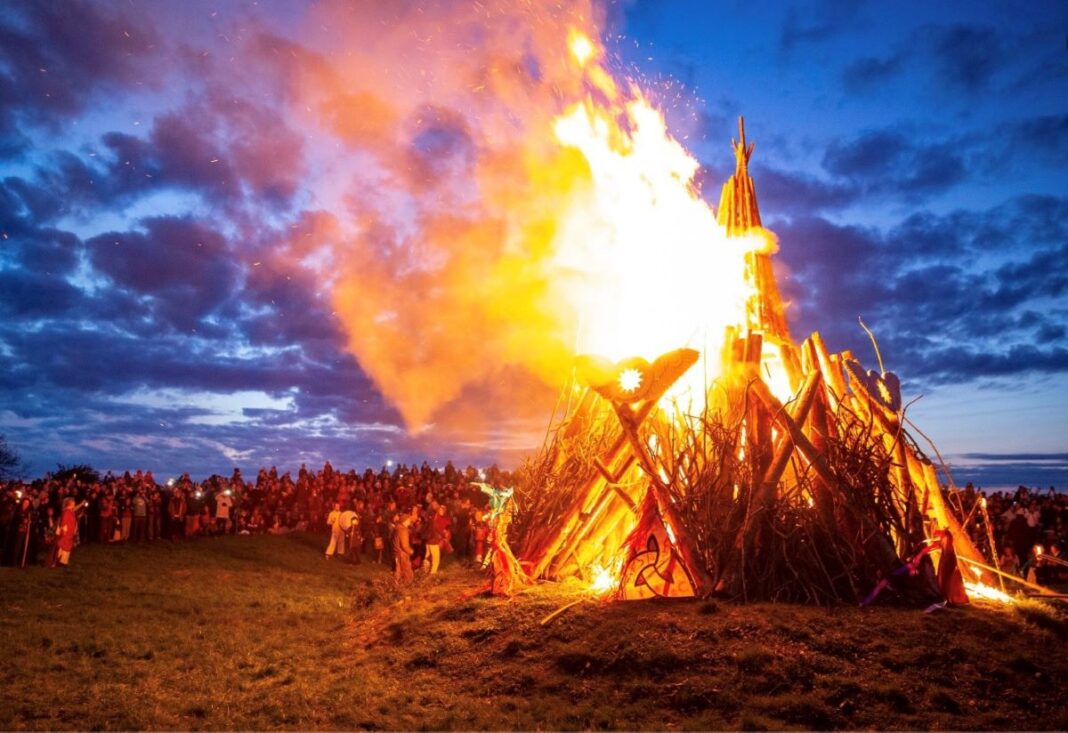
Today’s annual, fun-filled celebration of spooky costumes and overindulgence in candy has evolved from the ancient Celtic festival of Samhain (pronounced Sow-in) dating back over 2,000 years. Each year the Celts in Ireland gathered to mark the end of summer with a great feast. They believed it was a time when the veil between the living and spirit worlds was at its thinnest and that the dead could cross over. Many of the Halloween rituals we enjoy today like dressing up and lighting fires (or fireworks) come from the ancients’ desire to protect themselves from evil spirits during Samhain.
2. The first jack-o’-lanterns were carved from turnips
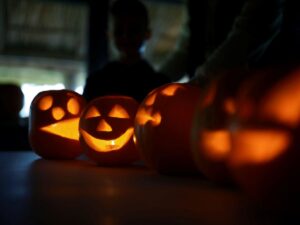
Long before pumpkins became associated with Halloween, Irish people carved scary faces into hollowed-out turnips and placed a candle inside. The fearsome lamps were one of the ways they scared off mischievous spirits that had crossed over from the Otherworld. The custom travelled with Irish emigrants to America where pumpkins were used instead. The name Jack O’ Lantern stems from an old Irish folk tale about a man cursed to walk the earth with only a flame from hell to light his way.
3. Ancient caves were thought to be gateways to the Otherworld
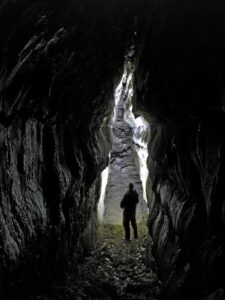
The Otherworld features strongly in Irish storytelling and certain landmarks across the island were believed to be portals into it. One such site is Oweynagat cave in County Roscommon which is referenced as the Gateway to Hell in some old manuscripts. It is especially associated with Samhain when evil spirits were said to emerge from it. Nowadays, people sometimes report seeing a black cat sitting at its entrance.
4. Trick-or-treating began as a medieval Irish custom
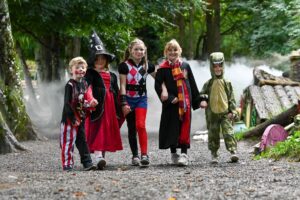
In medieval Ireland and Britain, the poor would go around the homes of the wealthy to beg for food in return for saying prayers for their dead. Refusing the beggars could bring bad luck. Over centuries the custom evolved and children began dressing up and going around houses to sing, recite poetry or even perform a trick in exchange for a treat.
5. Halloween in Ireland was also about games and matchmaking
A Halloween gathering of friends and family was always accompanied by games and some of these were designed to predict future romances. Burning two nuts on the open fire was a way of testing a relationship. If one nut jumped away, it was a bad sign! Another game involved blindfolding the players and having them pick a cabbage from a pile. The size and shape of the cabbage would indicate the size of their future spouse, and if you picked one with clay still attached, it meant that wealth was in your future.
6. Some of Halloween’s most famous characters come from Ireland
The world’s best-known vampire, and a Halloween favourite, Count Dracula, was created by Dublin author Bram Stoker. His supernatural narrative was influenced by nineteenth-century Gothic Dublin and Irish tales of the walking dead. Lovers of ghost stories will also be familiar with The Dullahan, a headless horseman from the Otherworld who carries his severed head, and the wailing Banshee – both harbingers of death and frequent characters in Irish folklore.
7. The Banshee is one of Ireland’s greatest folklore exports
The Banshee (from the Irish bean (woman) and sí (of the fairies) is known around the world for her cry which is said to foretell the death of a family member. Some say the banshees are ancient Celtic gods living as fairies, others that they are the spirits of the dead. To this day, people report hearing a Banshee wail before learning of a family bereavement.
8. Ireland’s Halloween cake could predict your future
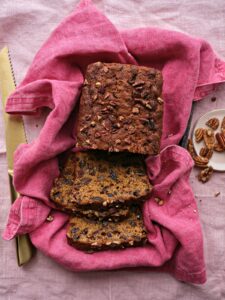
Traditional Irish barmbrack, a fruitcake with whiskey, is popular year-round but at Halloween it takes on particular importance. The custom was to put little objects into the cake before baking it. Each object symbolised what the future held for the person whose barmbrack slice held it – a ring for marriage, a pea for no wedding that year, a coin for wealth and a matchstick for an unhappy marriage. Apple tarts, another Halloween favourite, were also used to hide rings and coins.
9. Ancient Halloween traditions revolved around sacred fire
Samhain was one of the four great Celtic fire festivals and communities gathered around ceremonial bonfires to celebrate the end of the harvest and seek protection for the winter ahead. The bonfires were generally set on hilltops and the light from the fire could be seen from afar. The ancients believed that the light helped to hold back winter’s darkness.
10. Modern Halloween still follows 2,000-year-old traditions
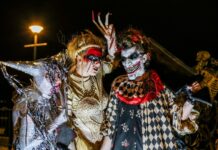
Most of the traditions that mark modern Halloween have their roots in Samhain and ancient Irish customs. Dressing up in Halloween costumes is a direct link back to when people disguised themselves to confuse the spirits that had crossed over from the Otherworld. Carved turnips and pumpkins also warded off evil spirits and the modern-day fireworks display that accompanies most large Halloween events is an evolution of the hilltop bonfires.