












From world-class surf havens to secluded bays, a coastal map that invites you beyond the usual itineraries
As continental Europe endures scorching summers and overheated cities, the island of Ireland is emerging as a climate refuge for travellers seeking a fresh perspective on a seaside escape. Its 7,500 kilometres of coastline, where land meets the Atlantic in dramatic fashion, embody the very essence of the coolcation: an alternative way to travel and a new philosophy of summer holidays, balancing the exhilaration of the elements with deep, restorative tranquillity.
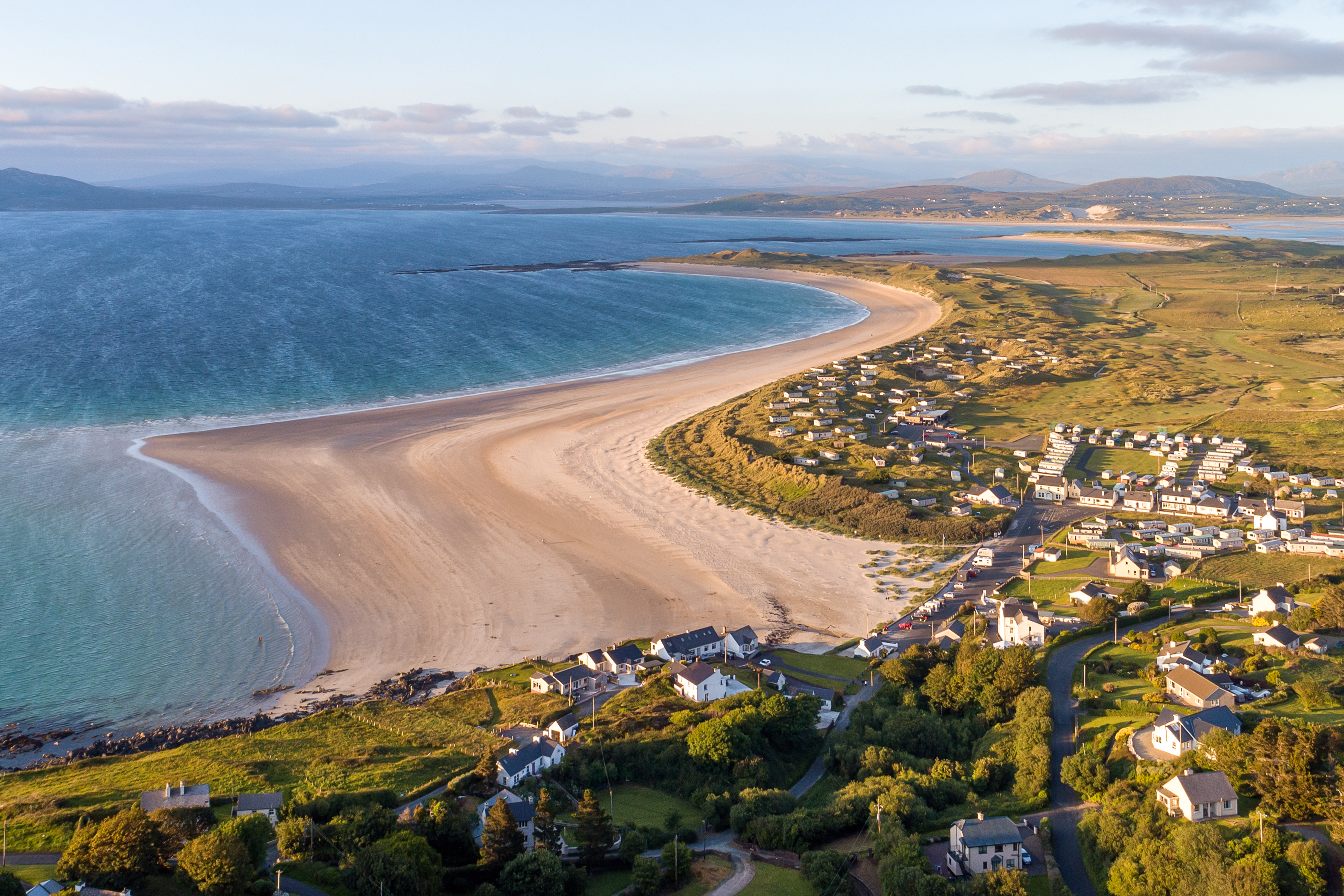
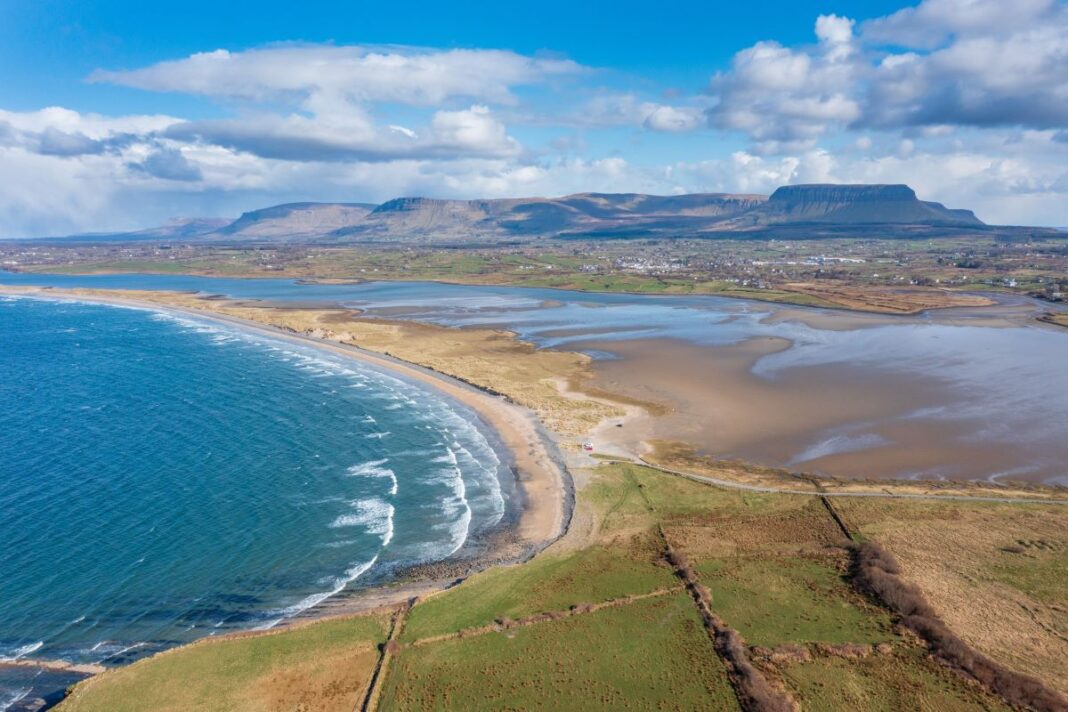
From the vast, wind-swept golden beaches of the Wild Atlantic Way to the sheltered bays of the east coast and the shorelines within easy reach of urban centres, the island boasts an exceptionally varied coastal landscape. Reflecting Ireland’s commitment to preserving both natural beauty and environmental quality, no fewer than 95 beaches have been awarded the prestigious Blue Flag, the international benchmark for water quality and sustainable environmental management.
Yet beyond official accolades, the true appeal of Ireland’s beaches lies in the unique character of each stretch of sand. These are places to experience, not merely to photograph. Here, for example, the ocean becomes the setting for a shared social ritual through wild swimming. Official resources such as Swim Ireland and the Me and the Water community provide inspiration and guidance for group open-water swims—an unforgettable opportunity to find the courage to plunge into the Atlantic and discover the extraordinary feeling it offers.
Exploring Ireland’s coastline means following a journey of contrasts, where the grandeur of nature alternates between thrilling adventure and quiet contemplation, beginning with the island’s most visually iconic beaches.
Landscape at Its Most Beautiful: The Most Photogenic Bays
Among Ireland’s many Blue Flag beaches are some of the island’s most breathtaking coastal landscapes.
In County Cork, the vast expanse of Inchydoney Beach is equally suited to surfing and long, contemplative walks. Further east, in County Waterford—part of Ireland’s Ancient East—Clonea Beach provides a seamless transition from the shoreline to the Waterford Greenway, one of the region’s finest cycling routes.
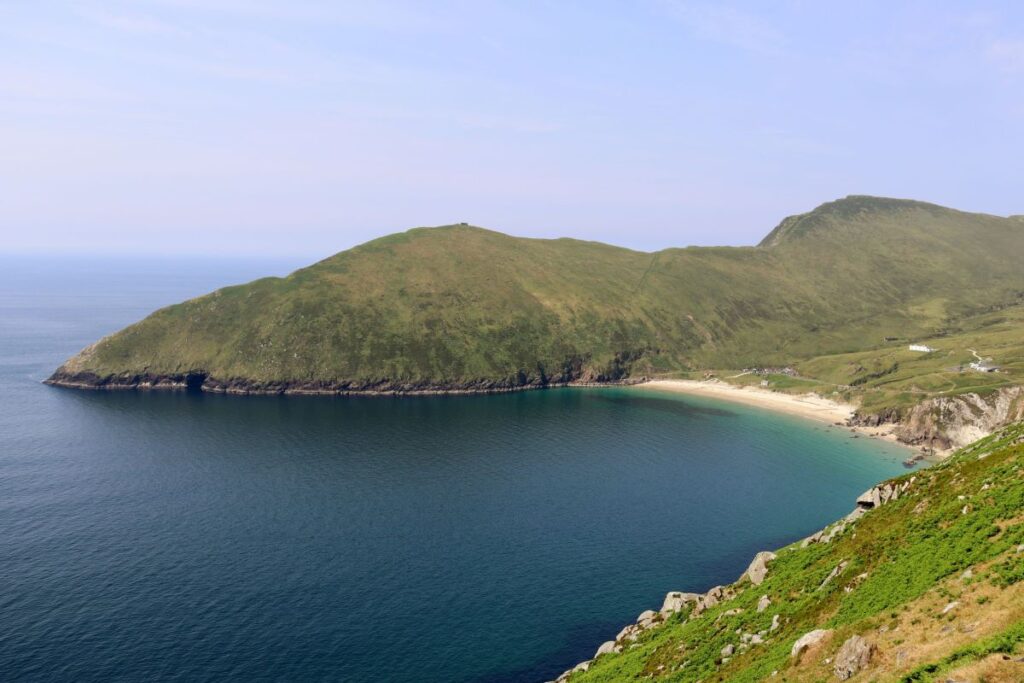
On spectacular Achill Island in County Mayo, Keel Beach attracts water sports enthusiasts thanks to its exposure to Atlantic swells. Just ten kilometres away lies the celebrated Keem Bay, featured in The Banshees of Inisherin. This perfect crescent of white sand is sheltered by dramatic cliffs plunging into the sea, approached via a wonderfully scenic coastal road. It is no surprise that this natural amphitheatre regularly appears in international rankings, including Condé Nast Traveller’s list of the world’s 50 best beaches.
City and Sea: Urban Beaches Within Easy Reach
Ireland’s compact geography makes it remarkably easy to combine cultural city breaks with the restorative qualities of the coast, allowing a refreshing swim or an evening walk by the sea to become the perfect complement to an urban stay.
Just outside Dublin, the Blue Flag beach of Velvet Strand in Portmarnock stretches for five miles, offering sweeping views of the Dublin Mountains and the Howth Peninsula. Equally convenient, Helen’s Bay in Northern Ireland provides a peaceful coastal retreat just minutes from vibrant Belfast, while Silverstrand is among the most elegant beaches within easy reach of Galway City.
Surf Sanctuaries and the Spirit of the Atlantic
Along the Wild Atlantic Way, the ocean has shaped not only the coastline but also the culture of the communities that live beside it, giving rise to a vibrant and sophisticated surfing scene.
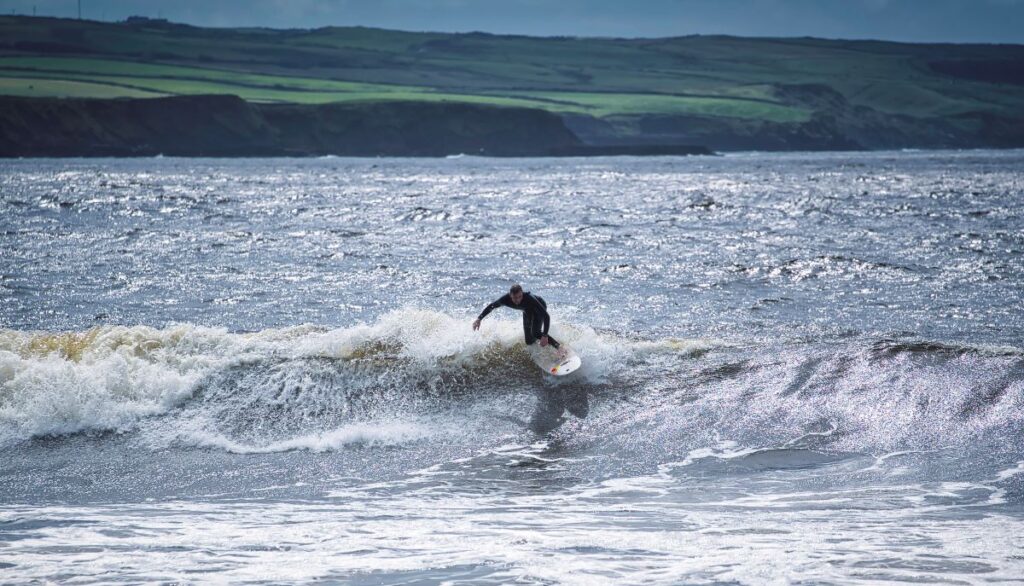
Bundoran, in County Donegal, is widely regarded as Ireland’s surfing capital. Its Blue Flag beach sits alongside a lively town whose rhythms are closely tied to the sea and its seasonal festivals. A little further north, Rossnowlagh Beach combines outstanding surfing conditions with excellent accessibility, making it equally popular with surfers and coastal hikers.
In County Clare, the renowned beach at Lahinch welcomes surfers of every ability while serving as the perfect coastal prelude to the magnificent Cliffs of Moher.
Coastal Flavours and Equestrian Traditions
Ireland’s coastline offers far more than beautiful scenery or water-based activities—it is also a rich cultural landscape that celebrates local traditions, craftsmanship and gastronomy.
On the County Sligo coast, along the Wild Atlantic Way, Strandhill Beach provides the ideal starting point for discovering Sligo Picnic, an initiative showcasing the region’s artisan food producers. Through the Sligo Food Trail, gourmet shops, historic hotels and stylish food trucks prepare sustainably packaged takeaway picnics featuring the freshest local ingredients—an authentic taste of the county to enjoy while taking in spectacular coastal views.
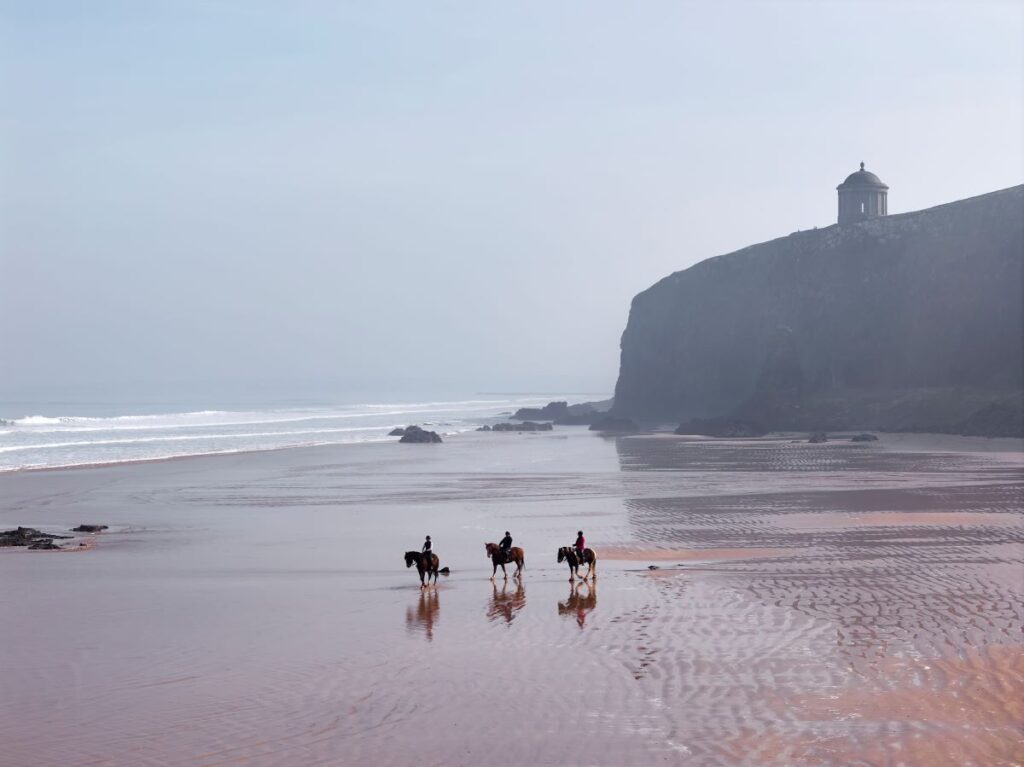
In County Derry, Northern Ireland, the experience becomes even more evocative. A visit to the magnificent Downhill Strand is paired with views of the iconic Mussenden Temple, an 18th-century neoclassical landmark dramatically perched on the cliff edge and famously featured in Game of Thrones. The firm sand also makes the beach ideal for horse riding, creating one of the most timeless and elegant images of Ireland’s equestrian heritage.
The Atlas of Silence: Hidden Coastal Gems
For travellers seeking solitude and untouched beauty, Ireland’s rugged coastline conceals extraordinary places far removed from conventional tourist routes.
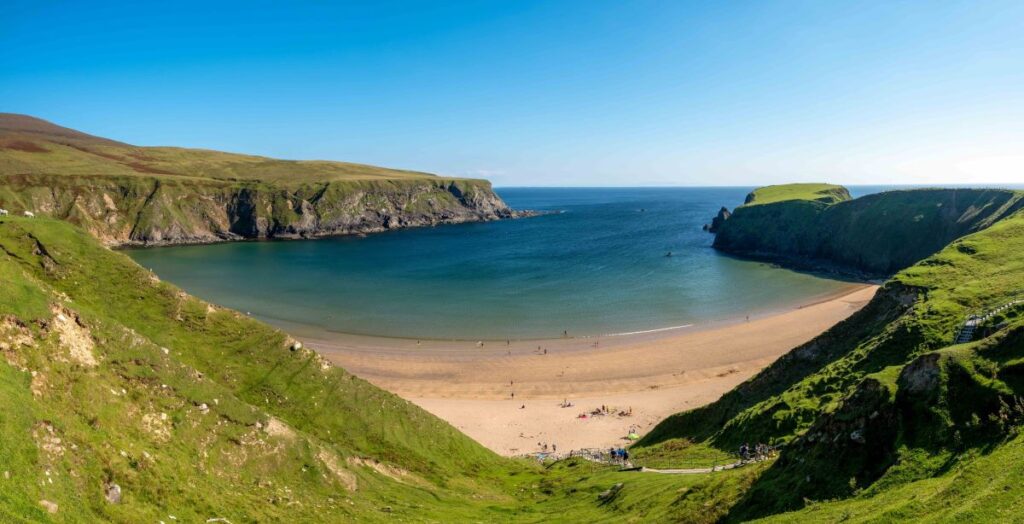
Silver Strand at Malin Beg, County Donegal, is a hidden bay enclosed by towering cliffs, reached by descending a dramatic staircase of 174 steps.
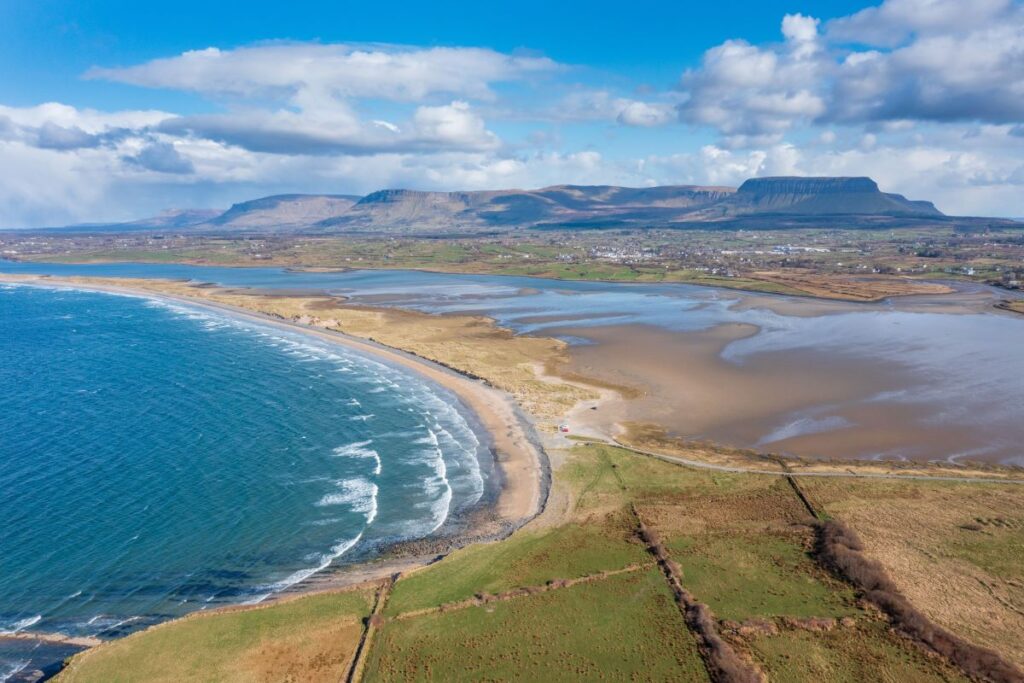
Other hidden treasures along the Wild Atlantic Way include Streedagh Strand in County Sligo, where sweeping dunes protect rich wildlife habitats, and Dog’s Bay in County Galway, famous for its dazzling beach composed entirely of crushed white seashells.
On the opposite coast, the peaceful Ballyquin Beach in County Waterford is perfect for long, solitary walks.
Perhaps the greatest sense of escape from modern life can be found at Fair Head in County Antrim, Northern Ireland, along the Causeway Coastal Route. From the small car park, a steep path leads down to the rocky shoreline and sandy coves of Murlough Bay—an extraordinarily wild and beautiful place where seals and seabirds are often your only companions.
A Coastline for Every Season
The appeal of Ireland’s coastline extends far beyond the summer months. It possesses a timeless quality that reveals itself in every season: invigorating winter walks, refreshing cold-water swims, relaxing seaweed baths in steaming outdoor tubs, dramatic autumn waves and summer picnics cooled by the Atlantic breeze.
With hundreds of beaches to choose from, there is always a stretch of coastline ready to match the dreams, interests and imagination of every traveller.