








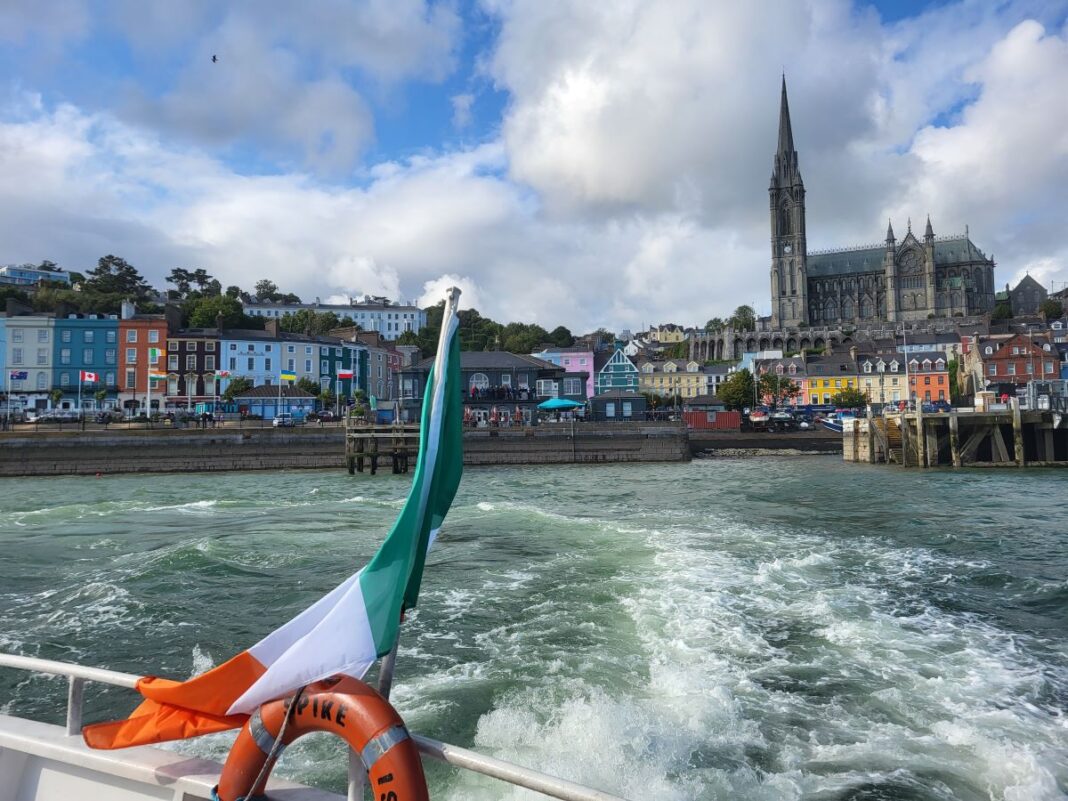
From emigration and maritime history to harbour walks, heritage attractions and colourful streets, Cobh offers visitors a destination shaped by journeys, poignant departures and heart-warming returns.
Few places in Ireland tell the story of emigration as powerfully as Cobh. This autumn/winter, as visitors look towards shorter breaks and slower-paced escapes, the Cork Harbour town offers a compelling mix of maritime history, family connections, harbour walks and heritage attractions, all rooted in a place that played a defining role in Ireland’s emigrant story.
From 1849 to 1950, more than 2.5 million people departed through Cobh, known as Queenstown until the early 1920’s, bound for new lives overseas. Today, visitors are travelling in the opposite direction, with the town attracting domestic and international tourists drawn by its history, striking harbour setting and wealth of things to see and do.
For visitors with Irish ancestry, Cobh can hold a particular significance. The town was one of the great departure points of Irish emigration and, for generations of families, its harbour was the last glimpse of Ireland before a journey across the Atlantic.
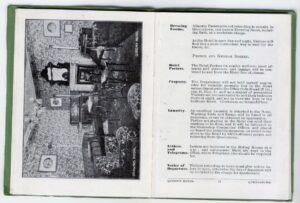
That history remains visible throughout the town, but it is only part of what makes Cobh worth spending time in. Set on Cork Harbour, the town combines heritage attractions, waterfront walks, colourful streets, cafés, restaurants and distinctive harbour views, making it an appealing destination for a day trip, short break or longer stay in Cork.
Visitors can explore the story of Irish emigration at Cobh Heritage Centre, housed in the town’s former Victorian railway station, where ‘The Queenstown Story’ traces the journeys of those who left Ireland through the port. Nearby, the statue of Annie Moore commemorates the 17-year-old who departed Queenstown with her two younger brothers in December 1891 and became the first immigrant officially processed at Ellis Island in New York on 1 January 1892.
Cobh’s connection with transatlantic travel also places it at the centre of two of the most significant maritime stories of the 20th century.
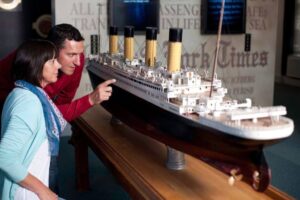
On 11 April 1912, 123 passengers boarded RMS Titanic at Queenstown, the liner’s final port of call before continuing across the Atlantic. Titanic Experience Cobh, located in the original White Star Line ticket office, tells the stories of the passengers who joined the ship there and explores Cobh’s role in Titanic’s final voyage.
Three years later, the town became central to the aftermath of the sinking of RMS Lusitania off the Cork coast on 7 May 1915. Survivors and victims were brought ashore at Queenstown, where local people played a major role in the rescue and recovery effort. The Lusitania Peace Memorial in Casement Square and the graves of victims at the Old Church Cemetery remain enduring reminders of the tragedy.
Beyond its museums and memorials, Cobh is best explored on foot. Visitors can stroll along the waterfront and promenade, take in views across Cork Harbour, climb the streets towards St Colman’s Cathedral, discover Cobh Museum, photograph the colourful ‘Deck of Cards’ houses and stop in the town’s cafés, pubs and restaurants along the way.
The harbour itself remains central to the experience of Cobh. One of the world’s largest natural harbours, it has shaped the town’s identity for centuries and continues to bring international visitors directly into the heart of the town through its cruise port.
For domestic visitors, Cobh offers an opportunity to rediscover a part of Irish history that has had a profound influence on families and communities across the country. For international visitors, particularly those with Irish roots, it offers a tangible connection to journeys made by previous generations.
More than 70 million people around the world are estimated to have Irish ancestry, representing an enormous international community with connections to Ireland’s history, heritage and family stories. Tourism Ireland has also identified genealogy tourism as one of Ireland’s fastest-growing tourism sectors, as increasing numbers seek to explore those connections and better understand where their own family stories began.
At a time when migration and the reasons people leave home continue to shape societies around the world, Cobh’s history also offers a reminder of Ireland’s own experience of departure and diaspora. Told through individual lives rather than statistics alone, the stories preserved in the town give visitors an opportunity to understand that history in a personal and accessible way.
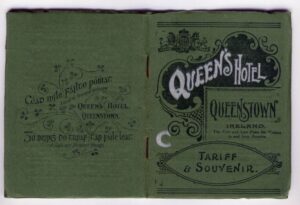
“Cobh has an extraordinary story to tell, but it is also a wonderful destination to experience in its own right,” said John Gately of Cobh Tourism and who is also the manager of the Commodore Hotel. The Hotel was one of the first purpose built Hotels in Ireland and opened in 1854 as the Queens Hotel. “Visitors can immerse themselves in the history, walk the waterfront, enjoy the harbour views, explore the town’s attractions and spend time discovering the character and beauty of Cobh.
“For many overseas visitors there is an added emotional connection because their own family story may have passed through this harbour. But whether you are travelling from Cork, elsewhere in Ireland or from the other side of the world, Cobh is a place where history feels very close and there is so much more to discover alongside it.”
From the millions who once left through Cork Harbour to the descendants now returning to learn more about where their story began, Cobh remains a place defined by journeys. And for today’s visitor, it is well worth making a journey of your own to discover this distinctive historic harbour town.
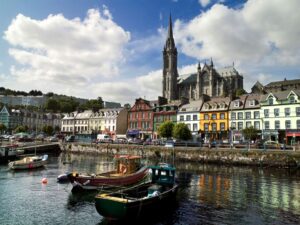
Autumn is an ideal time to explore Cobh at a gentler pace, combining waterfront walks and harbour views with museums, heritage attractions, cafés and restaurants, while using the town as a base to discover the wider Cork Harbour area.
Cobh is also an easy destination to reach and explore, with regular rail services from Cork City alongside ferry, bus and road connections. Nearby attractions including Spike Island, including their After Dark visits throughout October, Fota Wildlife Park, Fota House and Gardens and the wider Cork Harbour region are all within easy reach, making Cobh a strong base for a day trip, short break or multi-day stay.
With its colourful streets, maritime heritage, harbour views and stories woven through every corner of the town, Cobh offers plenty to fill an itinerary and just as many reasons to slow down and stay a little longer. Visitors can plan their trip, explore attractions, walks and places to eat, and find practical travel information at www.visitcobh.com